
What’s This Board For?
The Brand Strategy Board helps you distill a brand’s core identity, fast! Whether you’re working on a household name, a challenger brand, or a totally fictional one, this board gives you the strategic building blocks to shape how a brand talks, thinks, and shows up in the world.
It’s ideal for early-stage thinking, rebrands, or surfacing new angles for brands you think you already know.
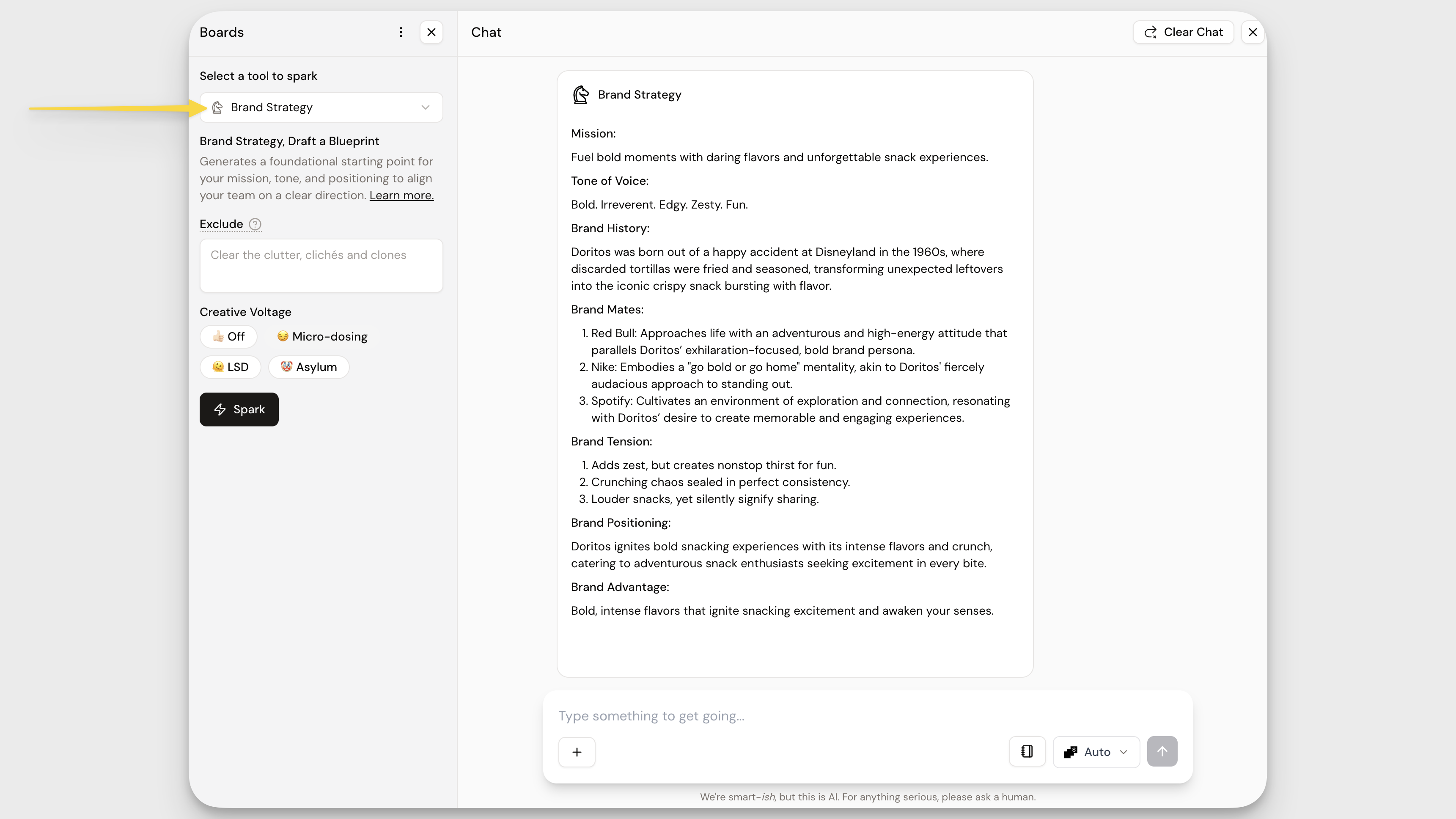
How to Use It
- Start with a brand (real or imagined). Make sure it’s captured in your Profile. Add any extra details like tone, RTBs, or a proposition to help shape what comes back.
- Adjust your Creative Voltage. Go safe, mico-dose, or full chaos with LSD and Asylum. The more you dial up the voltage, the more unexpected your results, perfect for pushing boundaries.
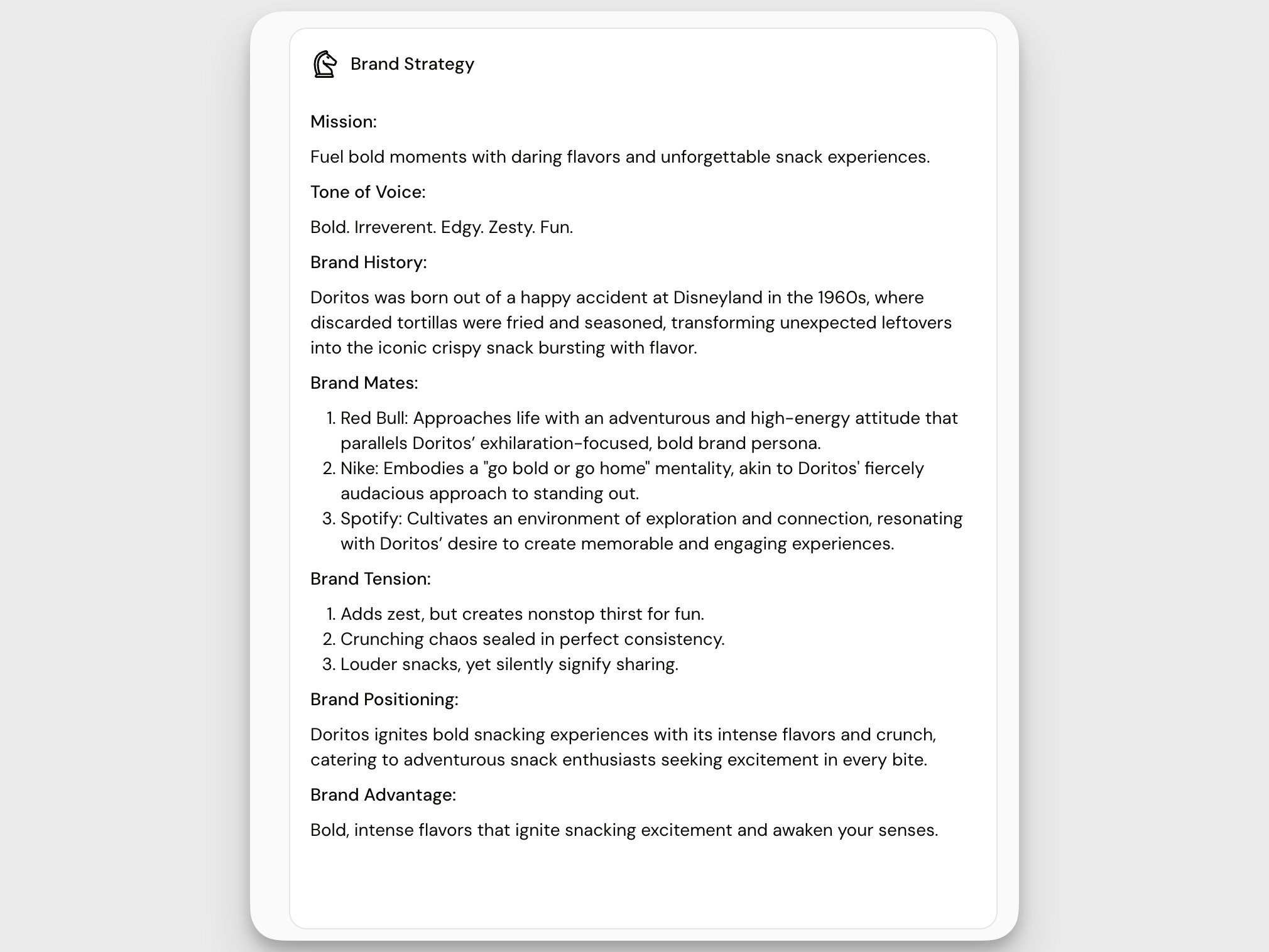
- Hit Spark. Let the board generate a snapshot of the brand’s personality and potential — from its mission to its tensions and brand mates.
Understanding the Output
Each part of the Brand Strategy output is built to unlock a different layer of brand thinking. Here’s what you’ll see and how to use it:
|
|
Heads Up
- The first spark might feel broad, use the Profile to narrow things in.
- High Creative Voltage = wild ideas (great for inspiration, maybe not for decks).
- Fictional brands work too, just know results are built from input patterns.
- Jump to The Validator if you want to validate a brand history.
Pro Tips
- Even for known brands, start here, it’ll reveal angles you haven’t considered.
- Pin your favorite sparks and drag them into boards like Creative Brief or Big Brand Ideas.
- Run the same brand at multiple randomness levels to stretch your thinking.
- Mix and match ideas, sometimes tension + tone = tagline gold.
You’ve got the brand DNA, now make it dance! 🧬